MFA Isn't Enough Anymore: What Business Leaders Need to Know About New macOS Cyber Threats
For years, Apple computers have carried a reputation for being more secure than their Windows counterparts. While macOS includes strong built-in security features, that perception has led many users to believe Macs are largely immune to the cybersecurity threats that regularly target businesses.
Unfortunately, cybercriminals don't share that belief.
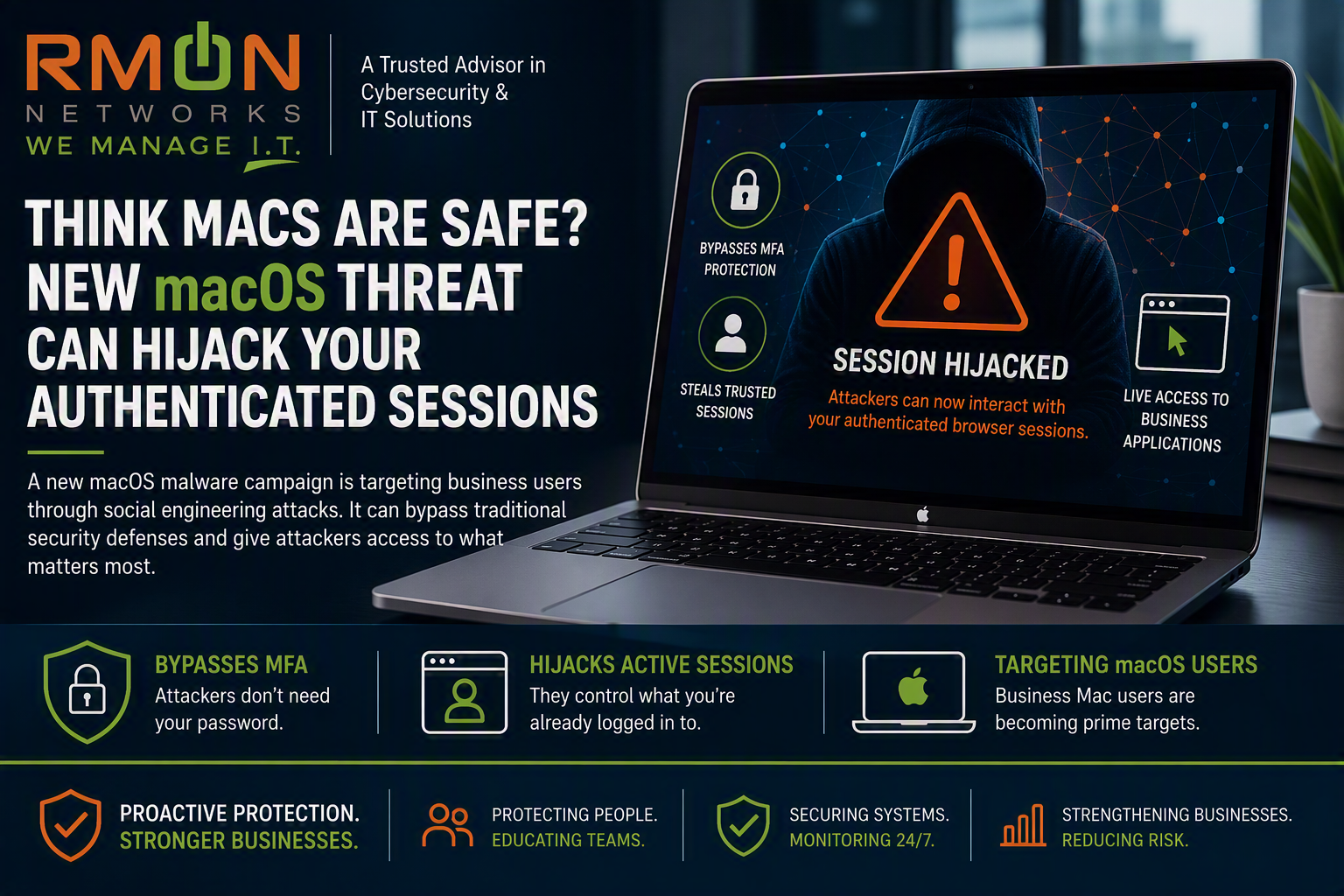
A newly identified malware strain known as AmnesiaStealer is specifically targeting macOS users through sophisticated social engineering attacks. What makes this threat particularly concerning is not just that it affects Macs, but that it can hijack authenticated browser sessions, potentially allowing attackers to access business applications, cloud platforms, and sensitive corporate data without ever needing to steal a password. The malware uses a "ClickFix" technique that tricks users into pasting malicious commands into the macOS Terminal and can ultimately give attackers interactive access to trusted web sessions.
The emergence of threats like AmnesiaStealer serves as an important reminder for business leaders: cybersecurity is no longer about operating systems. It's about protecting identities, devices, and the people who use them.
For organizations with executives, finance teams, developers, and administrators using Apple devices, this development highlights a growing reality. Cybercriminals are increasingly targeting macOS users because they often have access to the same valuable business systems, cloud services, and sensitive information as their Windows counterparts. In many cases, the perception that Macs are safer can make users less likely to recognize the warning signs of a cyberattack.
A New Tactic: Stealing Access Instead of Passwords
According to the recent threat intelligence, AmnesiaStealer users are lured to a convincing website and instructed to copy and paste commands into their Mac Terminal, unknowingly installing malware on their device.
Once installed, the malware can collect sensitive information including browser profiles, Keychain credentials, notes, documents, messaging sessions, and more.
However, the most concerning capability is its ability to take over an already authenticated browser session.
Rather than attempting to guess passwords or break through MFA protections, attackers simply step into a browser session that's already logged in and trusted. To security systems, the activity may appear to be coming from the legitimate user.
That means cybercriminals could potentially gain access to:
Microsoft 365 environments
Financial applications
Cloud management platforms
Customer databases
Internal business applications
Remote management tools
All without needing the user's password.
Why This Matters for Small and Mid-Sized Businesses
Many organizations assume that cybercriminals primarily target large enterprises. Unfortunately, that's not the reality.
Small and mid-sized businesses often have fewer security resources, making them attractive targets. Attackers understand that a single compromised user account can provide access to critical systems, sensitive data, and business operations.
What makes this attack particularly concerning is that it exploits something every organization relies on: trust.
Employees trust websites. Browsers trust authenticated sessions. Applications trust approved devices.
Cybercriminals are increasingly leveraging these trusted relationships to gain access without triggering traditional security alerts.
The Growing Risk of Human Error
The technology behind attacks like AmnesiaStealer is sophisticated, but the initial compromise often comes down to a simple mistake.
An employee follows instructions on a website. A user clicks a convincing prompt. Someone pastes a command they don't fully understand.
That's why cybersecurity awareness remains one of the most effective investments an organization can make.
Modern attacks are less about exploiting technical vulnerabilities and more about exploiting human behavior.
Your people are your first line of defense.
What Organizations Should Be Doing Now
While the threat highlighted in this incident specifically targets macOS users, the lessons apply to every business regardless of operating system.
Organizations should:
Educate Employees Regularly
Train staff to:
Never paste commands into Terminal, PowerShell, or Command Prompt unless instructed by a trusted IT source.
Be skeptical of websites that request unusual actions.
Report suspicious prompts or unexpected security messages.
Monitor Endpoints Continuously
Endpoint Detection and Response (EDR) solutions can help identify:
Suspicious command execution
Unauthorized processes
Malware activity
Unusual browser behavior
Modern endpoint monitoring plays a critical role in identifying attacks before they spread.
Strengthen Identity Security
Organizations should consider:
Conditional access policies
Device compliance verification
Risk-based authentication
Session monitoring and controls
Security today requires more than just passwords and MFA.
Develop an Incident Response Plan
When an account or device is compromised, speed matters.
Businesses should have a documented process for:
Isolating affected devices
Revoking active sessions
Resetting credentials
Investigating potential exposure
Communicating with stakeholders
Preparation can significantly reduce both recovery costs and business disruption.
The Trusted Advisor Perspective
At RMON Networks, we believe cybersecurity should be about more than simply deploying tools.
Technology alone won't stop an employee from falling for a convincing phishing page. Likewise, MFA alone won't stop a cybercriminal who has gained control of an authenticated browser session.
The most resilient organizations combine technology, monitoring, employee awareness, and strategic planning into a comprehensive security program.
Threats like AmnesiaStealer demonstrate how quickly the cyber landscape evolves. What worked five years ago may not be enough today, and what protects your organization today may need to evolve tomorrow.
That's why staying informed matters.
Our role is to help clients understand emerging threats, assess their risk, and implement practical safeguards that strengthen both security and business resilience.
In Summary
Cybercriminals continue to adapt their tactics, and session hijacking is becoming an increasingly attractive way to circumvent traditional defenses. Recent malware such as AmnesiaStealer demonstrates that attackers are no longer focused solely on stealing passwords. They're looking to steal trust itself.
Organizations that prioritize employee education, endpoint security, and proactive cybersecurity planning will be far better positioned to defend against these evolving threats.
Because in today's threat landscape, cybersecurity isn't just an IT issue. It's a business resilience issue.
At RMON Networks, we believe awareness is one of the most powerful cybersecurity defenses available. By understanding how modern threats evolve and who they target, organizations can take practical steps to strengthen their security posture before an incident occurs.
The latest macOS-focused attacks are a reminder that no platform is immune, and proactive security education remains one of the best investments a business can make.
Are you confident your organization can detect and respond to a session hijacking attack?
RMON Networks helps businesses evaluate their security posture, strengthen endpoint protection, and build practical cybersecurity strategies designed for today's evolving threats.
Contact RMON Networks today for a cybersecurity risk assessment and discover where your greatest vulnerabilities may exist before an attacker does.