
Insights from the RMON team
Practical IT, cybersecurity, and Microsoft 365 guidance for New Hampshire, southern Maine, and eastern Massachusetts businesses, written by the RMON team.
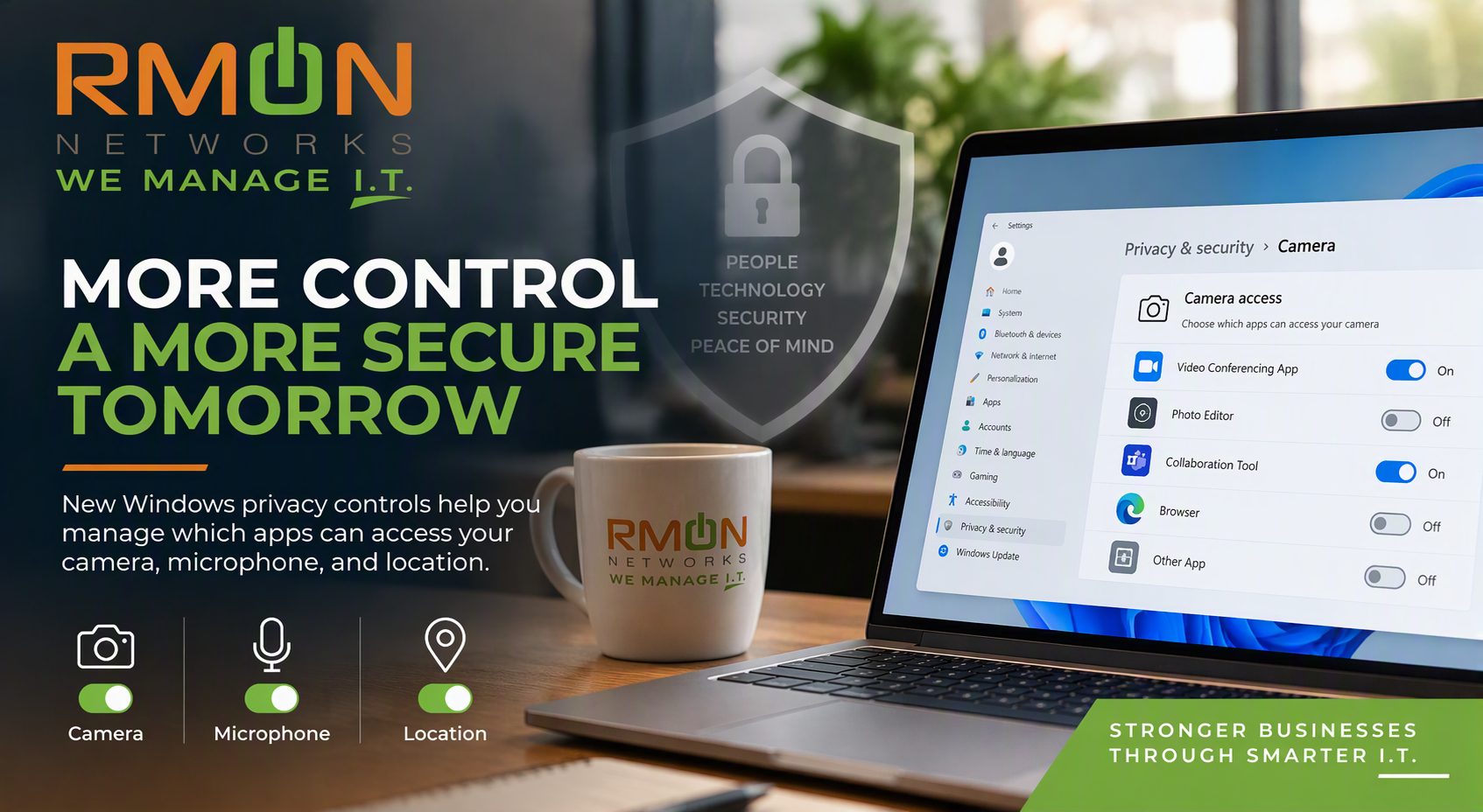
Windows Is Giving Businesses More Control Over App Privacy: What SMBs Should Know
Microsoft is introducing more granular Windows controls for camera, microphone, and location access. Learn what the change means for SMB security, privacy, and application management.

The New Economics of AI: What Microsoft's Copilot Billing Changes Mean for Businesses
AI is becoming a business essential, but managing costs requires a new strategy. Explore Microsoft's evolving Copilot billing model and learn how SMBs can balance innovation, budgeting, and governance with a practical hybrid approach to AI funding.
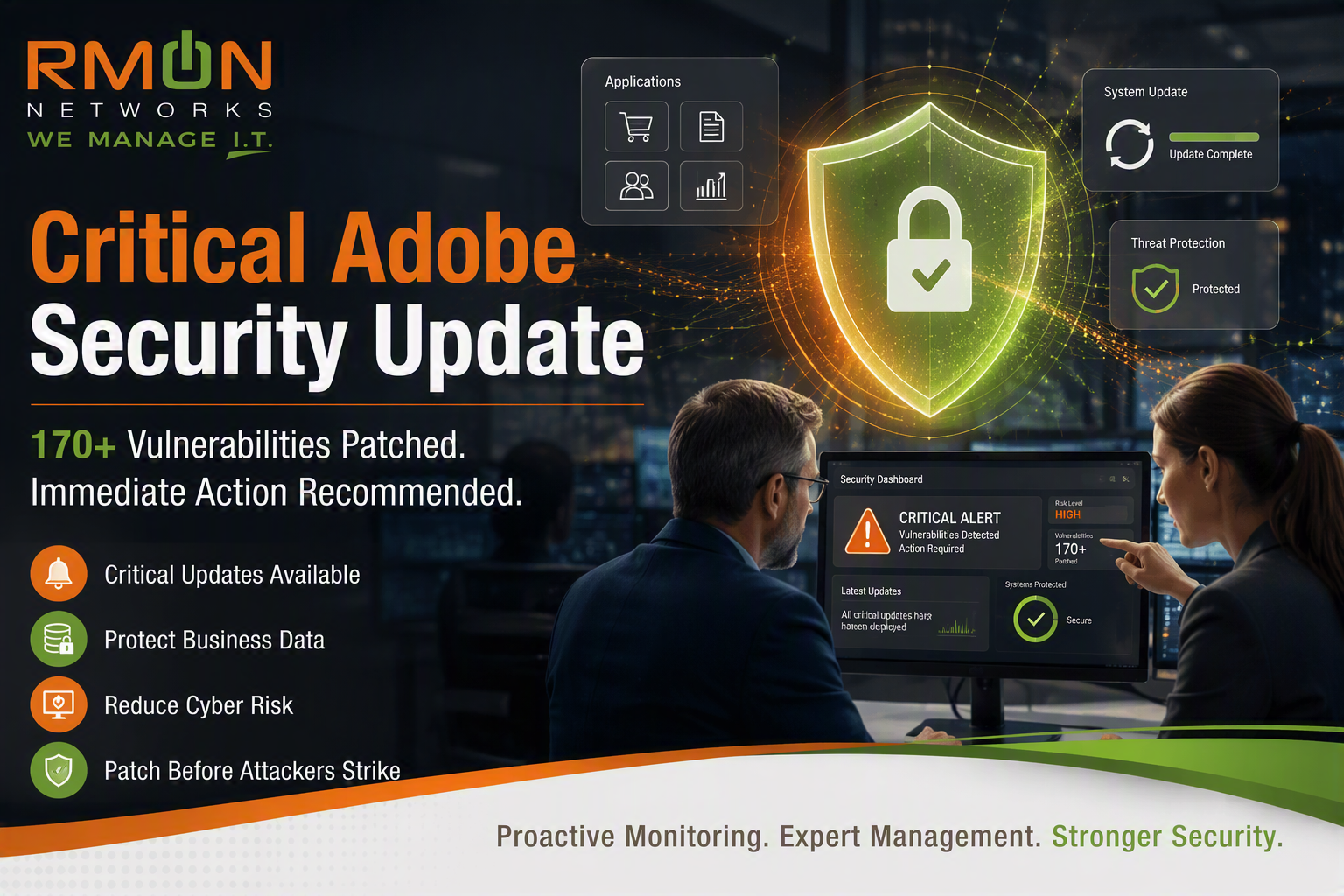
Adobe Patches 170+ Security Vulnerabilities: Immediate Action May Be Required
Adobe has patched more than 170 security vulnerabilities, including a critical zero-day affecting Adobe Commerce and Magento. Learn who is impacted and what actions to take.
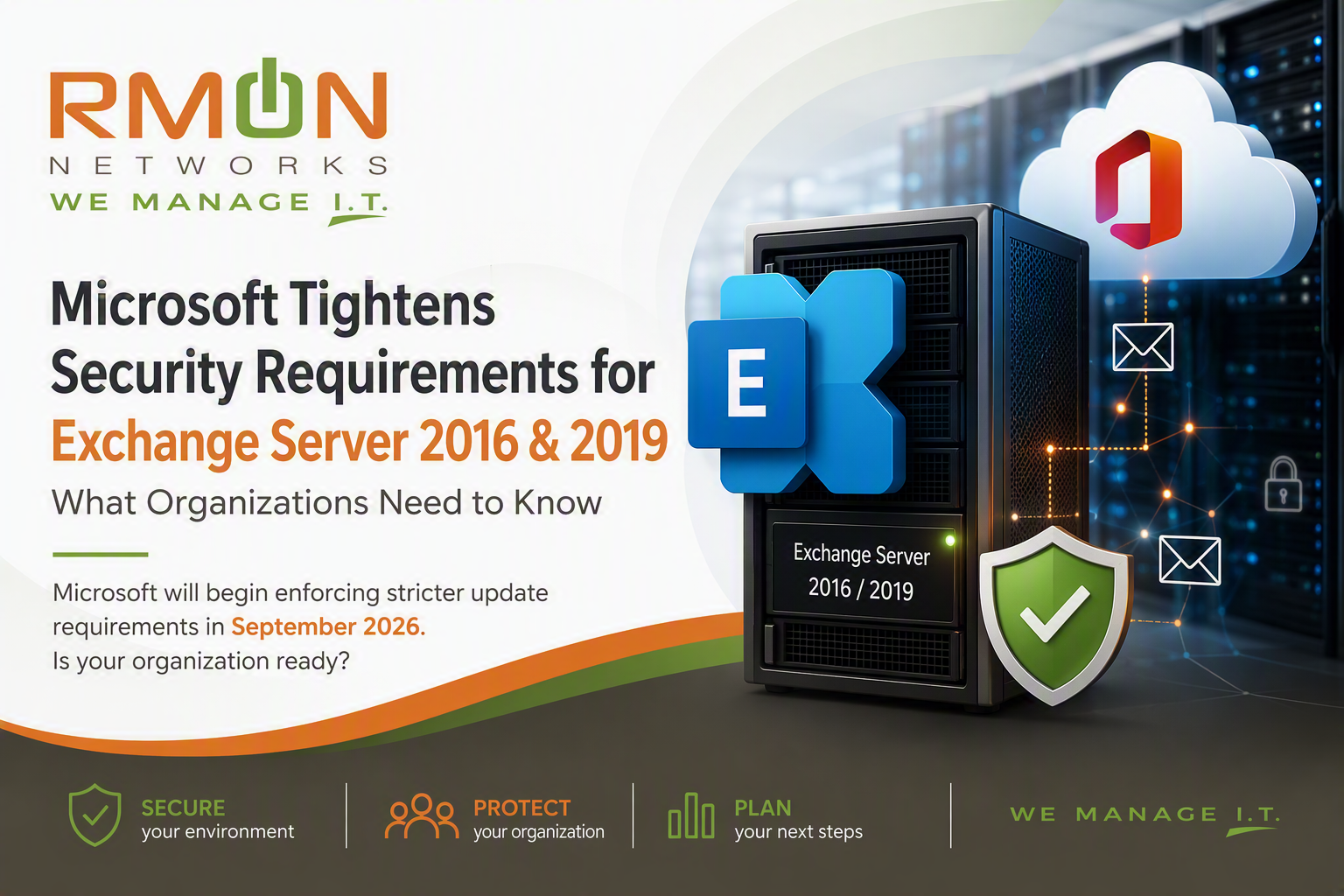
Microsoft Tightens Exchange Server Security Requirements: Are You Impacted?
If your organization is running Exchange Server 2016 or Exchange Server 2019 and uses a hybrid connection with Microsoft 365, this announcement may affect your email environment. Microsoft has announced that beginning in September 2026, Exchange Online will enforce a newer minimum supported Exchange Server update level for certain hybrid deployments. Organizations running outdated Exchange servers could experience email throttling or message delivery issues if required updates are not installed. Who Is Impacted? This change primarily affects organizations that: Run Exchange Server 2016 or Exchange Server 2019 on-premises Maintain a hybrid Exchange environment with Microsoft 365 Send email to Exchange Online using an On-Premises inbound connector as part of their hybrid mail flow configuration Organizations that rely on Exchange Server for mail routing, management, or hybrid identity integration should review their environment to determine whether they are running supported Exchange updates. What Is Changing? Microsoft is raising the minimum Exchange Server version allowed to send email to Exchange Online through hybrid connectors. Beginning in September 2026, Exchange servers must be running at least the final publicly available Exchange 2016/2019 update released in October 2025 to avoid throttling or blocking. Microsoft also stated that future enforcement updates will require versions newer than any publicly released updates, meaning organizations may eventually need to move to: Exchange Server Subscription Edition (SE) Microsoft's Extended Security Update (ESU) program A cloud-first migration strategy Why Is Microsoft Making This Change? Cyber threats targeting email systems continue to increase, and Microsoft is taking additional steps to reduce risks associated with outdated Exchange infrastructure. Microsoft emphasizes that servers not running current security updates remain vulnerable to known security issues, even if they appear to be functioning normally. What Could Happen If You Do Nothing? Organizations running older Exchange versions may experience: Slower email delivery Throttled message flow to Microsoft 365 Potential email delivery blocks in the future While these controls initially apply only to servers using specific hybrid connectors, Microsoft notes that enforcement scopes could change over time. Recommended Next Steps We recommend that organizations using Exchange Server 2016 or 2019: ✅ Verify current Exchange patch levels ✅ Confirm hybrid mail flow configurations ✅ Review Microsoft's latest Exchange update requirements ✅ Develop a modernization roadmap for Exchange infrastructure ✅ Evaluate migration options before future enforcement deadlines How RMON Can Help RMON is actively helping organizations assess Exchange environments, validate compliance with Microsoft's latest security requirements, and plan for long-term email modernization. If you're unsure whether your Exchange deployment is impacted, our team can perform an Exchange Health and Hybrid Configuration Assessment and help develop a roadmap that aligns with Microsoft's evolving support model. Concerned your Exchange environment may be affected? Contact RMON today to schedule an Exchange Security and Hybrid Readiness Review.
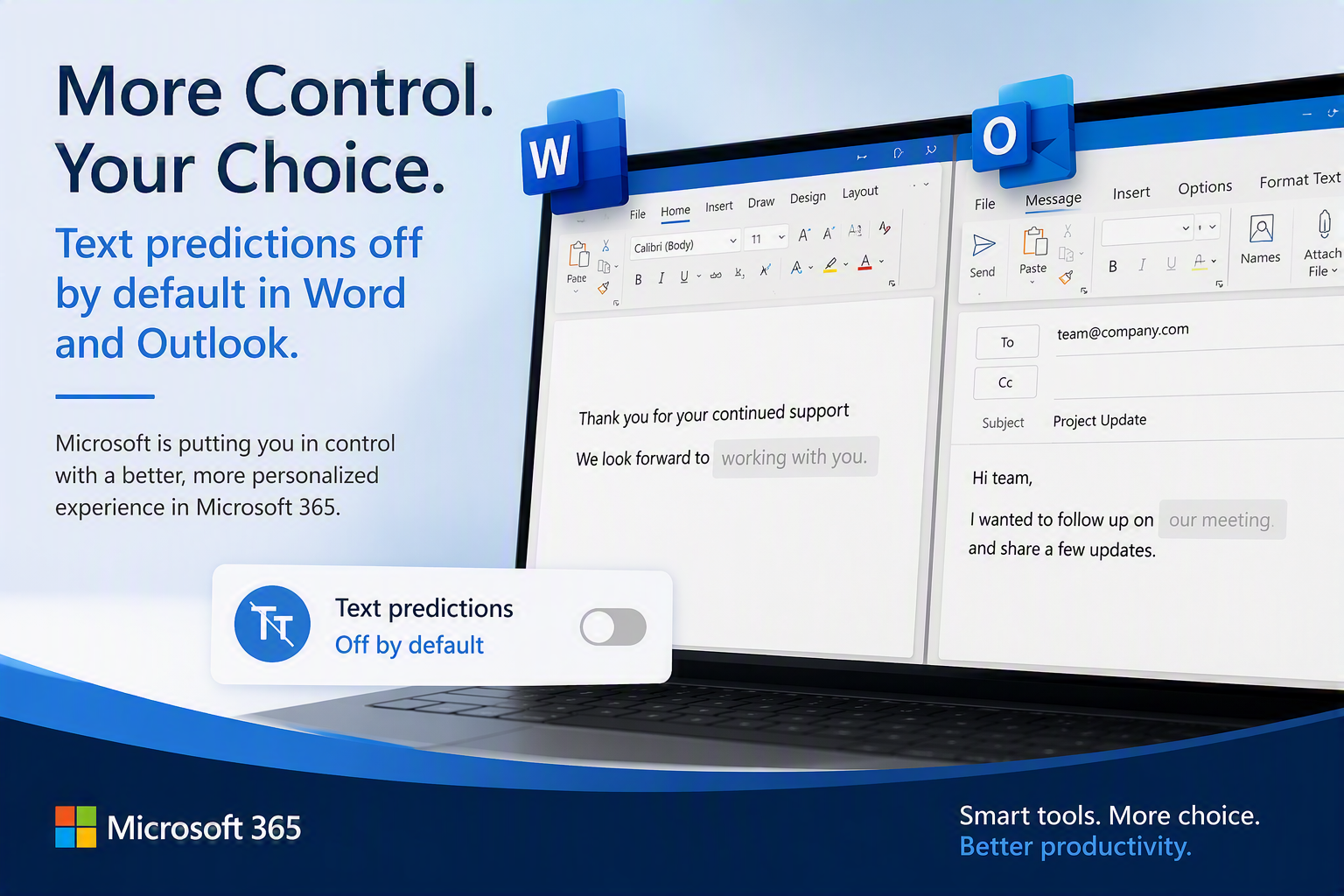
Microsoft Gives Users More Control Over Text Predictions in Word and Outlook
Microsoft is changing Word and Outlook text predictions to be off by default. Learn what the update means for Microsoft 365 users and how it impacts your organization.
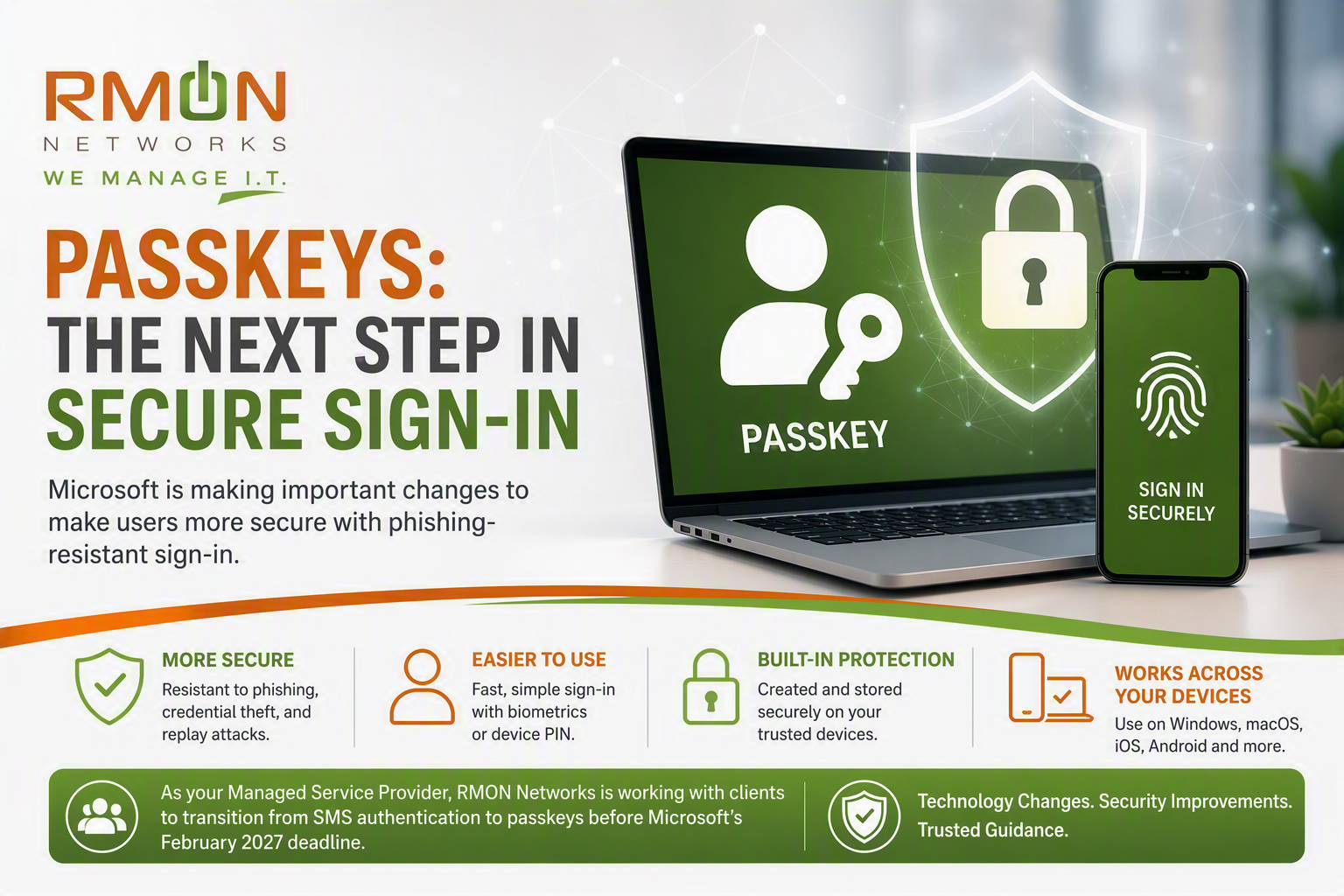
Passkeys Are Coming: Here's What Your Business Needs to Know
Passkeys are becoming the new standard for secure sign-in. Learn why Microsoft is making this change and how RMON Networks helps clients stay protected.

Are You Investing in Technology or Just Paying Technology Bills?
Many SMBs spend thousands on technology each month but struggle to measure results. Learn how to evaluate technology ROI through productivity, security, employee experience, and business growth.
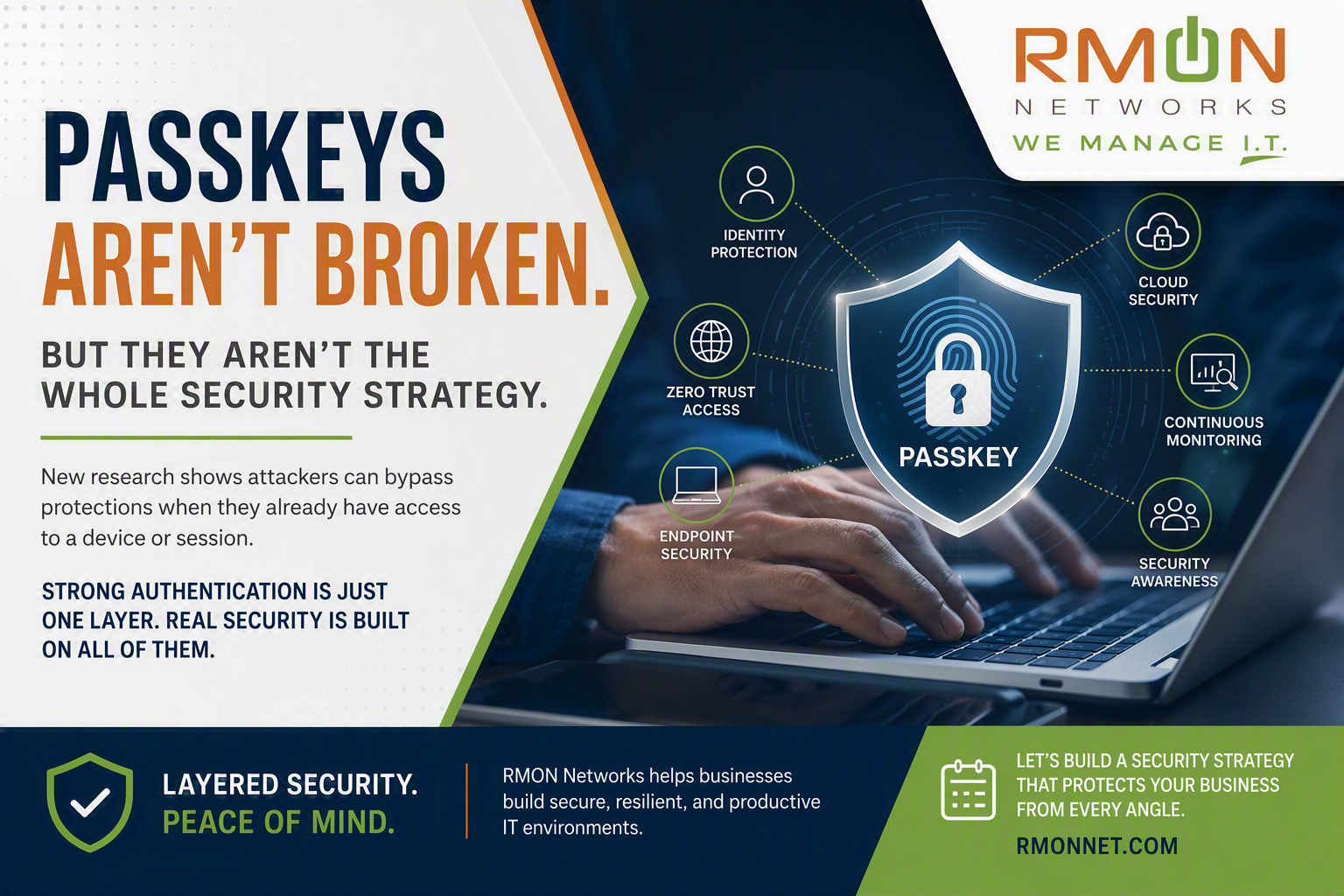
Passkeys Aren't Broken. But They Aren't the Whole Security Strategy.
Recent headlines raise questions about passkey security. Learn why passkeys remain essential and how businesses can strengthen identity security.
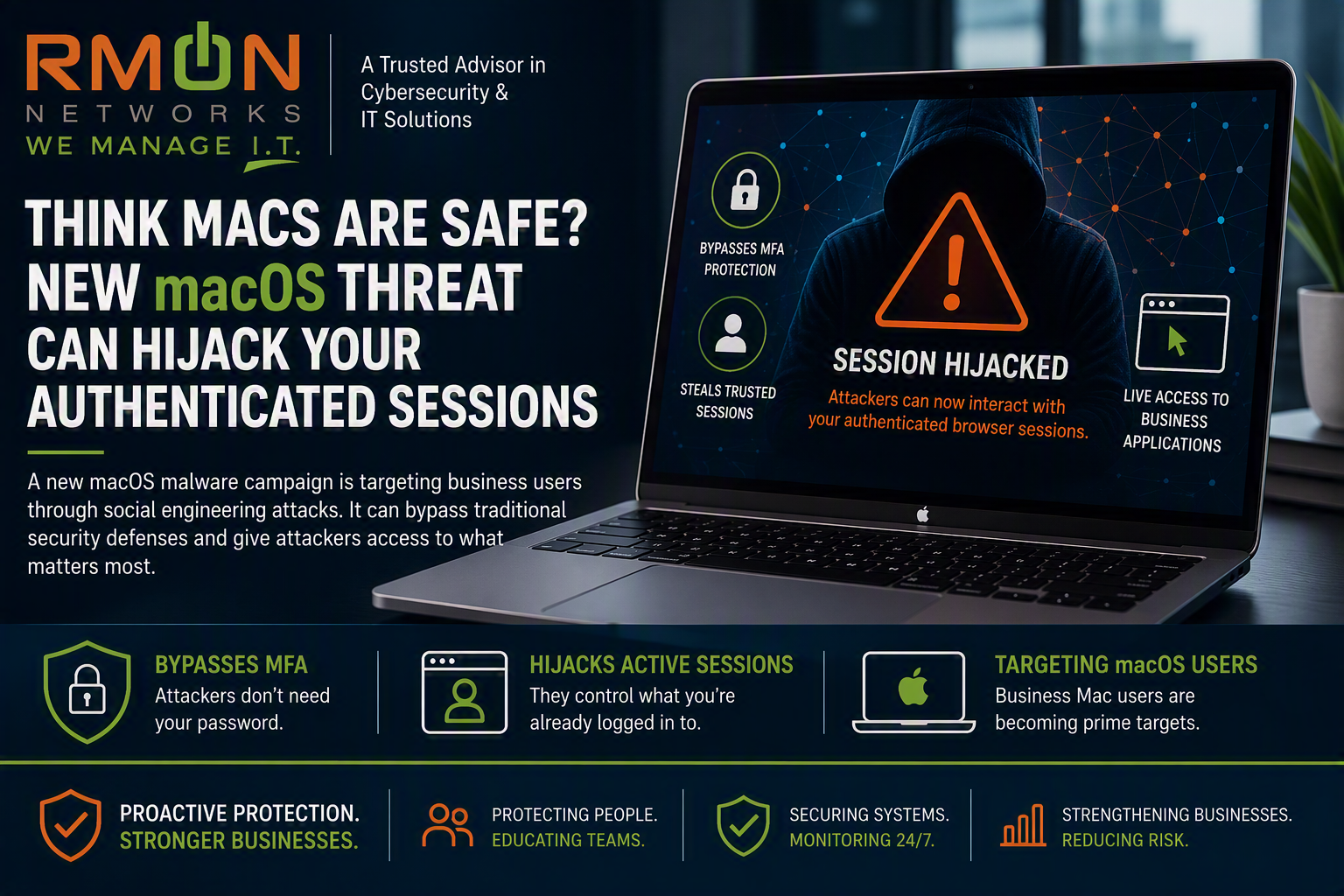
MFA Isn't Enough Anymore: What Business Leaders Need to Know About New macOS Cyber Threats
A new macOS malware campaign is targeting business users through social engineering attacks. Learn the risks and how to strengthen your organization's defenses.
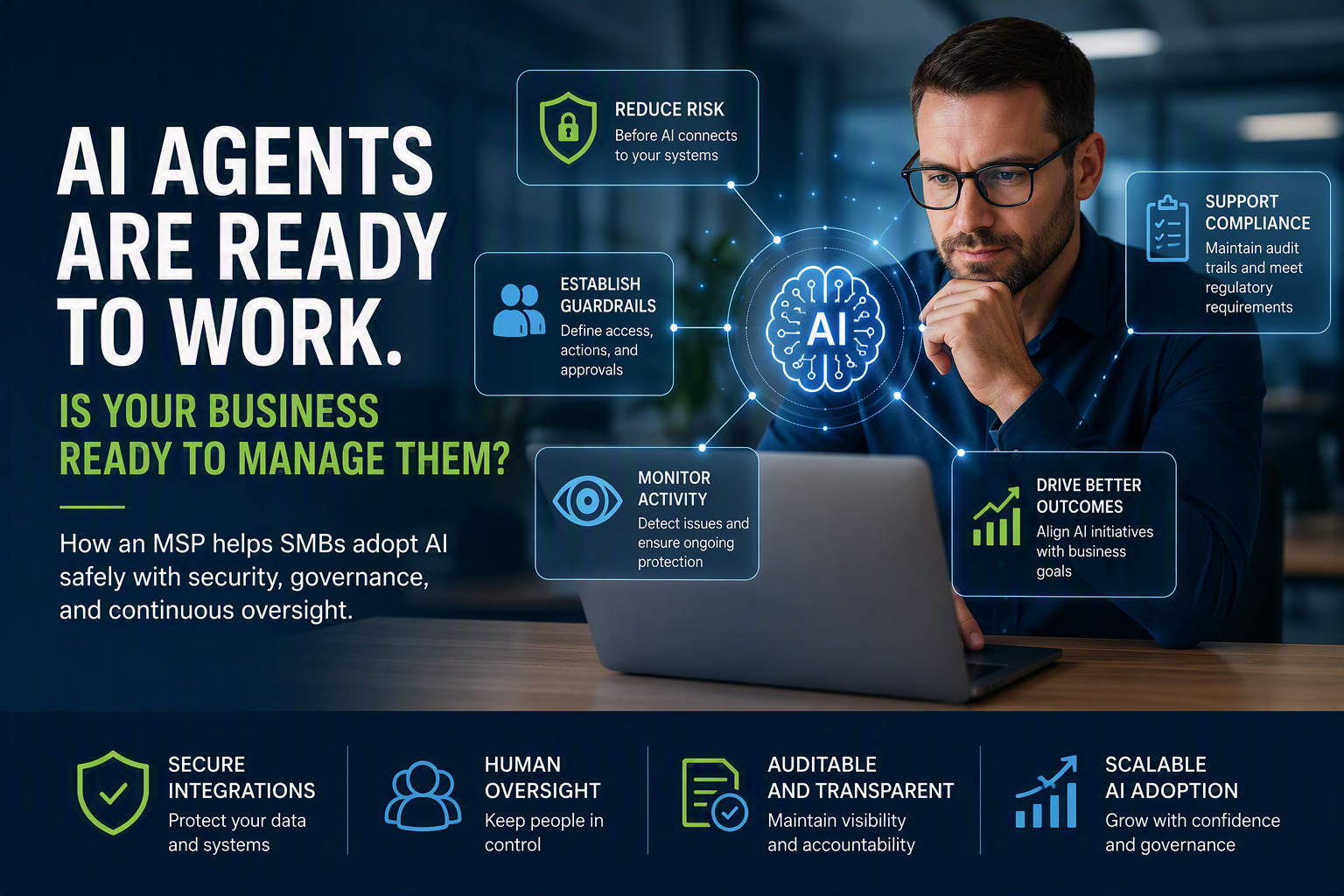
AI Agents Are Ready to Work. Is Your Business Ready to Manage Them?
AI can streamline operations and boost productivity, but it also introduces new risks. Learn how an MSP helps SMBs adopt AI securely with governance, monitoring, and strategic guidance.
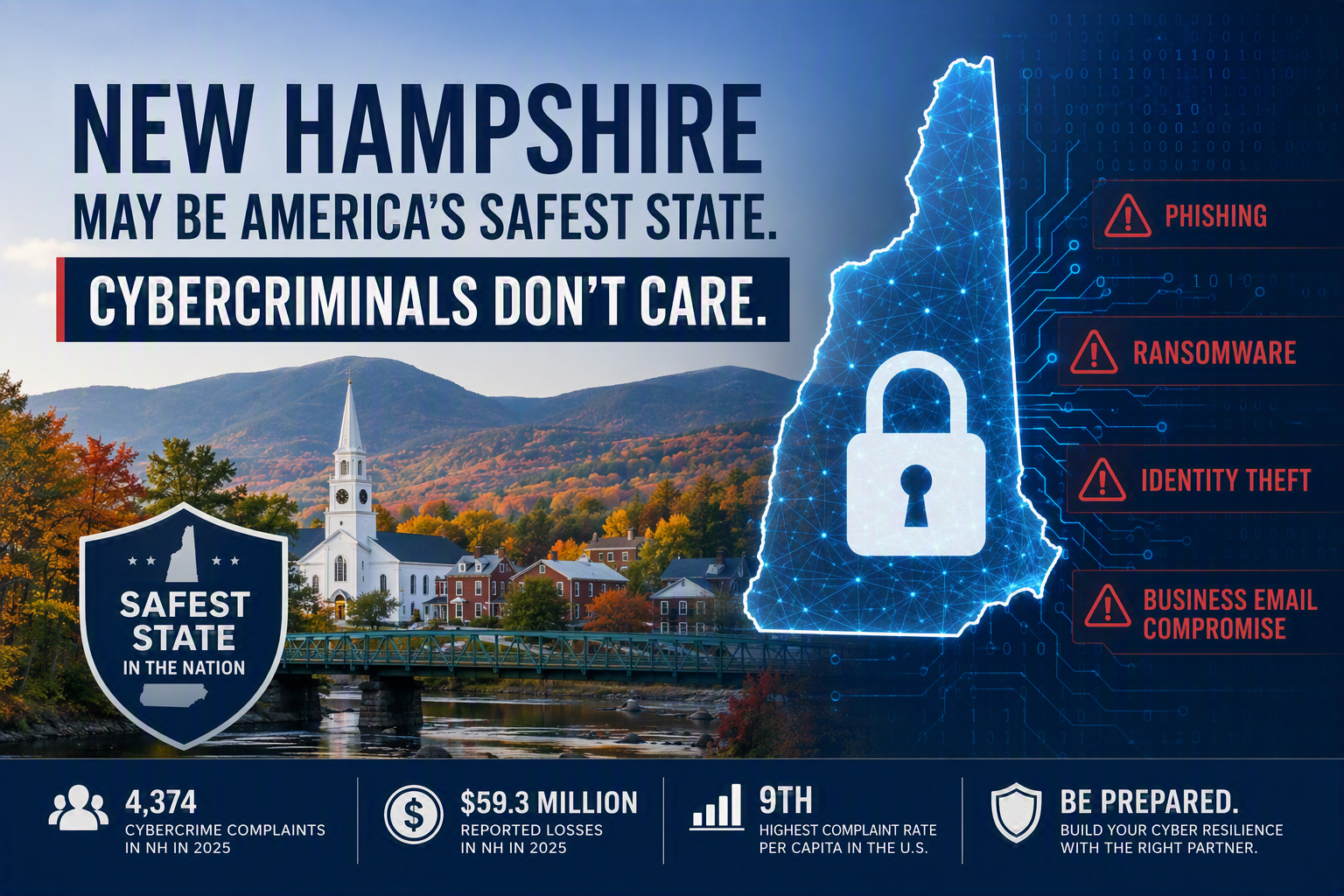
New Hampshire May Be America's Safest State. Cybercriminals Don't Care.
New Hampshire may be the safest state in America, but cybercrime continues to impact businesses, municipalities, healthcare providers, and schools. Learn why cybersecurity remains essential for every organization.
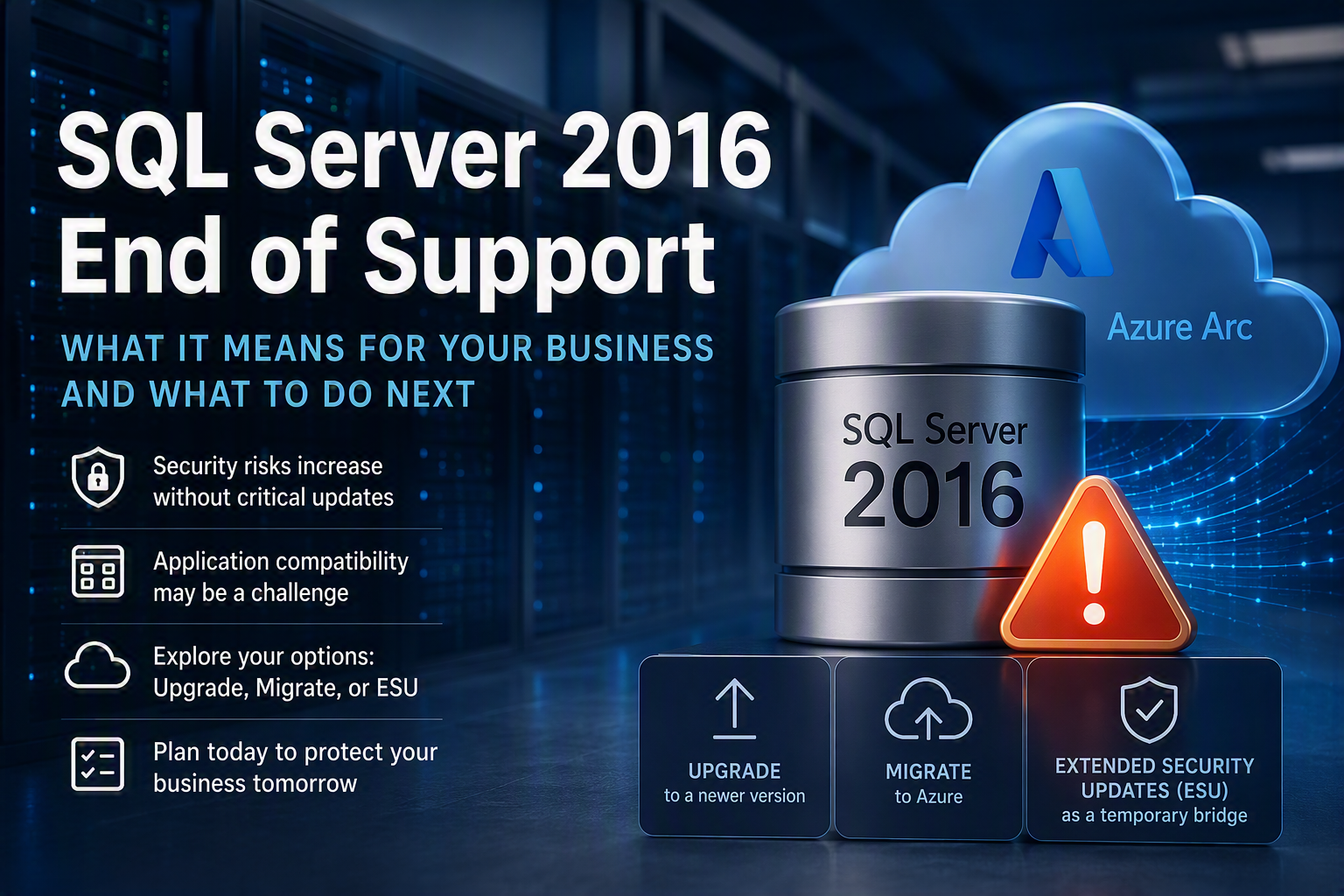
SQL Server 2016 Has Reached End of Support: What Businesses Need to Do Next
Microsoft has ended support for SQL Server 2016. Before upgrading, understand application compatibility risks, Azure Arc ESU options, and how to protect business-critical systems.